Friday, May 24, 2013

And I would ride 100 miles, and I would ride 100 more...

June is going to be a busy month on the bike! I've got four - count 'em - four centuries on the calendar. And I'm looking forward to every one of them. Here's the list, just so we can keep it all straight.

June 1st - 2013 100 Miles of Nowhere Ride

The first big ride is coming up on June 1st and is my second consecutive 100 Miles of Nowhere. This year, I'll be on a stationary trainer in front of a local bike shop. My registration fee for that ride supports a Cancer charity fundraiser sponsored by Elden Nelson, aka, Fat Cyclist.


June 6th - 2013 Ride2CW (Ride to Computers & Writing)
 
This is an annual fundraising ride supporting the Computers & Writing Graduate Research Network Travel Scholarship fund. The fund pays travel stipends for grad students and fixed-term faculty to attend the annual pre-C&W network forum and the conference. It is a great cause! Click the link above to donate! My ride this year will take me from just outside Pittsburgh, PA to Frostburg, MD which is the site of this year's C&W conference, at just over 100 miles along the Great Allegheny Passage.


June 15th - 2013 Tour de Cure Michigan

My main fundraising event each year, this will be my 7th consecutive ride in support of the American Diabetes Association. My 2013 campaign is going along well - we've raised nearly $1500 so far and have about three weeks left as of this writing. The ride is a lovely 100 mile route. That takes me through Hell, MI, among other truly beautiful places. Watch this space for more about that ride. And run, walk, or ride over to my donation page to support the campaign!


June 23rd - 2013 5th Annual Allegrina 100 

Last, but by no means least, is the best little century around! The Allegrina 100 benefits the John Allegrina scholarship foundation and is, without question, a wonderful event organized and ridden with fabulous people! I strongly encourage all riders of all levels to check this event out. It is organized as a series of successive loops, which makes it ideal for riders doing their first event or doing the event with family members. Folks can do one or all of the loops, start early, start late, etc. There will be great food and fine, fine beverages at the start/finish area, the historic Felt mansion in Holland, MI. Best of all...you can still register! 


I'm also sneaking in at least one road race on foot, the Dexter-Ann Arbor Run 5k, on June 2.It's going to be a great June! Hope to see many of you out on the roads and trails!


Friday, May 17, 2013

Hack Your Metabolism, Part III: Sending the Right Messages

Note: this post is part three of a three part series I am doing in connection with a fundraiser in 2013 called the Tour de Cure. If this helps you or someone you love, please consider clicking here to see more and donate to support my campaign on behalf of the American Diabetes Association. Thank you!

In the first part of my "Hack Your Metabolism" series, I talked about mindful eating and in the second installment I talked about what role exercise plays in regulating blood glucose and, ultimately, in losing or maintaining body weight.

In this final segment of the Hack Your Metabolism series, I want to talk about something that the two other discussion have in common. In my experience it is not obvious to most people, nor even to experts. And so it is the closet thing to "a secret" if not the secret behind making metabolic changes that improve your health in a measurable way. Including controlling body weight.

Here it is: mindful eating and the kind of exercise "dosing" I discussed both trigger long-term changes to the messages your body sends to regulate your metabolism. Insulin signaling is one of these types of messages, and an important one, for regulating the way your body uses energy.  What's counterintuitive about this is that we don't often think about changing eating habits or doing exercise as anything but direct interventions. That is, we think: eat less, gain less weight! Exercise more, burn more calories!

But our bodies are more complicated than that. And they are really, really good at adapting to external conditions that effect the most fundamental functions: eating, drinking, breathing, etc. It's that homeostasis thing again.

What I'm arguing here is that we should think of changes in our eating habits as a way to re-wire the circuits and change the messaging patterns that resulted in an increase in health risk. And we should adjust our expectations to how (and how long it takes for) the changes to take effect accordingly. This is a bit tough to get, I know. It took me a long while. So let's think through the example that most people care about a lot: losing weight.

Losing Weight: The Secret Is, There Is No Secret...Right?
On the surface it is simple. To lose weight you have to use more energy than you take in over some period of time. Right? Well...yes. Kind of. Not always, and not exactly.

Dieting - as an intervention in eating habits - is the most common way people pursue weight loss. But as my mindful eating post hopefully made clear, not all food is treated the same way in the body and the processes that signal your body to break down fat to use for energy may not happen if you eat too little of something (like carbs) or only something else (like proteins). So the first thing to ask when you are considering whether a new way of eating is appropriate as an intervention for you is to ask: what kinds of messages am I trying to re-program by eating in this new way?

Let's talk Paleo for a second. It may be the current hot diet. As with others, it is shrouded in controversy. And as with others, it has some elements that have been shown to work. In particular, it has been shown in at least one small-N study to improve insulin tolerance (though not a rate much different than doing those short, quick bursts of exercise I wrote about in part II). That same study showed that, over 12 weeks, it had no effect on weight loss or waist size, however.

All of this makes perfect sense to me. Why? Because the change in eating habits implied by the Paleo diet would have the most immediate impact on messaging related to blood sugar. Why? Less dietary carbohydrates means that the body would need to get better at using the blood glucose available and would initiate some changes to do this. This may or may not include a metabolic state called "ketosis," a condition that is sometimes portrayed as a desirable end goal for folks on the Paleo diet. But ketosis is not best understood as an end state. It is, rather, an indication of both the metabolic functions and messaging going on in the body. Specifically, it refers to the presence of elevated levels of ketone bodies in the bloodstream, something that happens when liver glycogen stores (remember those? the bodies' mid-term storage medium for blood glucose) are depleted.

Endurance athletes are familiar with ketosis, even if they don't know it by name. We have to train our bodies to switch to a different form of fuel during long efforts (lasting more than 45 minutes). And the better trained we are, the smoother this transition goes so that it is easier to maintain a given level of intensity even after our more immediate sources of fuel - carbohydrates - are depleted.

I bring up endurance athletes because this is a group that explicitly understands their exercise and eating habits to be in the service of causing specific kinds of metabolic changes: those that increase athletic performance in their sport. They (ok, we) can get a bit obsessive about it, in fact. And so in this group we have some interesting examples of what happens over time when we induce something like ketosis. I'll give you the short answer: the body can adapt. Even in extreme conditions, human bodies can learn to use other forms of fuel - in the case of Paleo, fat and proteins - to get what it needs. And, just as importantly, our bodies will continue to adapt to make these new processes more efficient. Eventually, we'll see a new set of metabolic rules in place that keep the body in a homeostatic state...all regulated by a new set of messaging pathways.

Habits Are What matter
The paleo diet isn't magic. And its efficacy in any one human body likely has little or nothing to do with the fact that some strain of ancient humans that you may or may not share ancestral DNA with ate in particular ways. If it works for you it is because it rewires your metabolism in a certain way, for a certain amount of time, to cause changes that reverse negative outcomes.

Your body adapts and changes constantly. It's trying to keep you alive and healthy, but it is rigorously biased to attend to immediate, basic needs. It will fulfill those needs in the short term to keep you alive at the expense of longer term health risks. So it is up to your conscious self to keep those longer term risks in check while complying with your greedy brain's need for fat.

The good news is that almost any sustained change in eating habits can cause signaling changes. So can almost any level of exercise. For how long? well that depends. And what changes does it cause? well that depends too. But what this all means is that there are no perfect diets and no perfect exercise routines. There are only habits that cause changes - harmful or helpful. And that word - habits - is important. One time doing anything is not likely to cause *any* signaling changes at all! So eat a piece of cake. Once. It's fine. Run once, if you feel like it, but it won't magically make you healthy.

What we are aiming for when we hack our metabolism are durable adaptations. These happen when we apply a new level of adaptive stress, which is a fancy way to say "habits."

Like what you read? Feel free to share, make comments or ask questions below. Also check out my Tour de Cure fundraiser here and consider a donation! Thanks!

Monday, May 13, 2013

2013 100 Miles of Nowhere Preview: Now with 100% more juggling!

So last year, I did this crazy thing where I rode around my circle driveway (almost) 3000 times...

It was all for not one, but two really great causes. First, it was part of Fat Cyclist's fundraiser that he does each year, which is a thumb in the eye of cancer. And second, I posted and tweeted about my exploits and raised some money for *my* campaign for the American Diabetes Association Tour de Cure. My 2013 Campaign is underway. You can support it here!

This year, I'm doing it again. I'm registered for Fatty's 2013 event, which will raise money for Camp Kessem, a place where kids who've lost loved ones to cancer can meet others and do a little healing. I'm planning an equally absurd day in the saddle this year for 2013, and with similar hopes of a good day of raising awareness and raising funds.

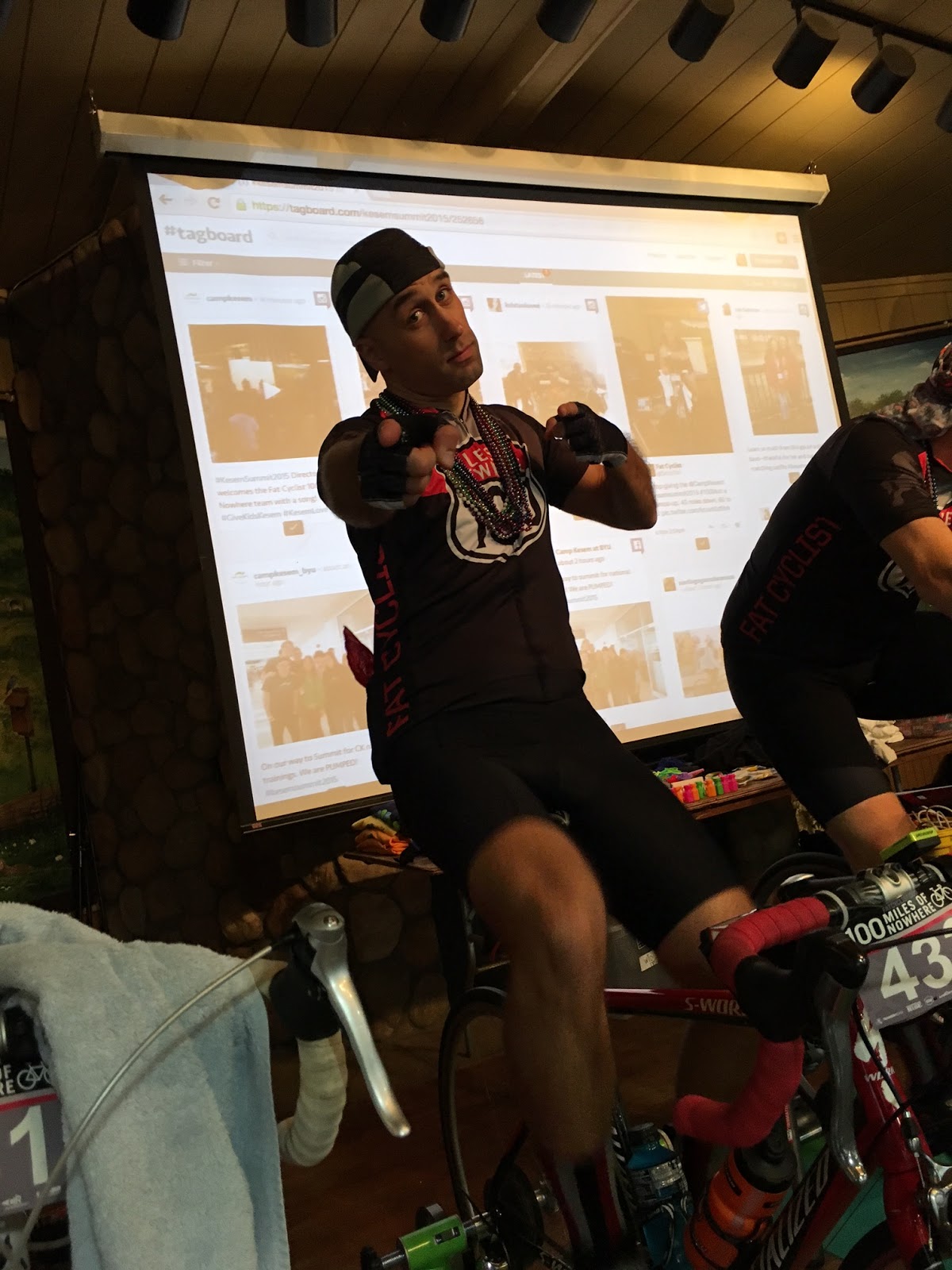
Here's how it will go down. On Saturday June 1, I'll ride 100 simulated miles on a stationary trainer in front of my local bike shop: Denny's Central Park Bicycles. They've agreed to lend me a chunk of their front sidewalk so I can pedal my way to, well, nowhere. How did I come to this plan you ask? Well, I asked you! (or at least some of you...). I posted a poll. People voted. And the winner was a true 100 Miles of Nowhere. On one of these:
Here's an action shot:

I also took some suggestions. One of which was that I spend some of my time riding to nowhere while also juggling. This seems like a fine idea to me. And I am happy to consider others as well. Because you see the whole point is to make a spectacle of myself so that we might have more people paying attention to the ways that riding a bike can make you healthy! And we all know I'm not above making a spectacle of myself...

So feel free to make some additional suggestions in the comments section below about what I might do while riding my bike on Saturday June 1st. If you are in the area, drop by and ring a cowbell and support Denny's shop. I'll invite you all to support my Tour de Cure Campaign for 2013 too, of course, where we've already raised over $1000!


Thanks!

Tuesday, May 7, 2013

Hack Your Metabolism, Part II: What is Exercise For?

Note: this post is part two of a three part series I am doing in connection with a fundraiser in 2013 called the Tour de Cure. If this helps you or someone you love, please consider clicking here to see more donate to support my campaign on behalf of the American Diabetes Association. Thank you!

In the first part of my "Hack Your Metabolism" series, I talked about eating and how to pay attention to what you eat and what that does to your blood glucose (BG). I made the case that even if you weren't watching your blood glucose due to risks associated with diabetes, it is worthwhile to pay attention to it anyway. Why? because it helps you to monitor the amount of energy you take on board. Too much energy coming in means that the body has to deal with a "rich mix" in the bloodstream: high blood glucose. Over time if this rich mix condition persists, metabolic changes start to happen. One that concerns most people is that you accumulate fat. Why? Because that is one way the body stores excess fuel it hasn't an immediate need for.

What Exercise is NOT For
This second installment of "Hack Your Metabolism" isn't precisely about fat, though. I bring up the subject because I want to address a misconception that many people have about the role of exercise in staying healthy, losing weight, and controlling BG. That misconception is that exercise is for using up the energy you took on board from eating a recent meal. Like earlier that day. Or even earlier that week. You hear this kind of thing all the time: "I have to work out later because I ate like a pig yesterday!" Or this: "I ran today, so I'm going to treat myself to a Triple Venti Frappucino with Whip..."

Yeah, no. That's not what exercise is for.

For one thing, it is difficult for most people to exercise long enough and with enough intensity necessary to make up for any "extra" eating they do measured in calories alone. That Frappucino? 510 calories. I'd have to run more than 20 miles at 10 min/mile pace to burn that many calories! But recall our little discussion about mindful eating. Did we talk about calories there? No. We talked about carb units. That little post-workout treat at Starbucks would be worth almost six of them (84g). And a big spike in your BG levels to go with it. Even if you worked out really hard and for a really long time - with a few little exceptions limited to the first 30-45 minutes after exercise - your body reacts the same way to that big cup o' carbs no matter what!

So What *is* Exercise For?
Adaptive stress.

Engaging in exercise presents a challenge to your metabolism causing adaptation. Ideally. Where there is no challenge, there is no change. This idea is consistent with our discussion of mindful eating. Recall that the body is amazing at mobilizing regulatory systems to achieve and maintain a sense of "business as usual." You might recall the scientific name for this: homeostasis. New stress on the system - whether it comes from lifting weights, pedaling a bicycle, or doing yoga - may present new energy needs to muscle groups as they are challenged. The body responds to these challenges not only in the short term (burning calories during a workout), but also by preparing for the next similar challenge. These longer-term changes are signaled and initiated during exercise, but take place long after the workout is done while the body is recovering from the effort.

So the point of a workout is the change that results when your body is at rest afterward. This includes an array of changes to your metabolic systems that regulate energy, its storage and its use. Your body is constantly adapting to the conditions it finds itself in, in fact, whether you are working out or not. It is always trying to achieve homeostasis. This is a moving target. When you are more sedentary, for instance, the body adapts to that too. Adaptations to chronic high BG, a condition that can happen when your intake of carbs keeps that "rich mix" flowing, put stress on the mechanisms associated with insulin response. The body usually adapts to these stresses in ways that maintain homeostasis, until it cannot anymore. This is a condition related to Type II diabetes (T2DM), but it is life-threatening on its own even when some of the T2DM symptoms are in check. It goes by another name: Syndrome X or Metaboblic Syndrome. I wrote about that in a post titled Rx:Bike. Some of the thoughts in that piece helped shape this one. Check it out. And then go ride a bike. But first, I have just a few more things to say about exercise and adaptive stress.

What Kinds of Exercise Produce Good Metabolic Changes?
I have great news in response to the question that I get asked a lot: "what kind of exercise should I do?" Answer: any kind! All kinds! Whatever feels fun to you. Whatever makes you smile and lifts your mood. Me, I like bikes the best. And running, well, it's complicated. But I do it. I've learned to like yoga. I hate push ups, but I like the core workout stuff ok. I love to play sports like basketball, softball. I even juggle. It's all good. No really.

It *is* all good because, depending on my fitness level and the kind of activity I choose, it can all apply a "dose" of adaptive stress that will produce positive metabolic changes (among others). The more sedentary you are, the more likely it is that any amount or any level of physical activity will kick off some positive adaptations. As you get more fit - that is, as your body re-models itself internally and externally to better handle the heightened needs for energy, strength, and endurance that your new activity level requires - the "dose" of adaptive stress will have to change in order to produce positive results. So you run a bit longer or a bit faster, lift a heavier weight, or maybe add some Zumba classes to your your twice-a-week water aerobics schedule.

It's all good. Potentially. But it is not all good for the same thing. Different kinds of workouts produce different kinds of changes, of course. But let's keep things simple and talk just about varying two factors of exercise that apply to almost every activity you can think of: duration or length of the workout and intensity or how much effort the workout requires.

Two Categories of Adaptations that Enhance Metabolism (And How to Cause Them)
As with my advice in Part I, the information I am presenting here is a mix of things that are well known if not always well followed and relatively new knowledge produced, in some cases, by some recent science. Some of it is quite surprising. I won't explain all of that here. But if you want a very engaging overview, check out The Truth About Exercise with Michael Mosely. What I will do instead is break down two kinds of changes to metabolism that seem to be related to different kinds of exercise. This, in turn, may help you exercise a bit more mindfully.

1. How to Enhance Your Insulin Response to Regulate BG More Efficiently

This one is easy and fast, if not painless: short, maximum-intensity intervals of exercise. This is sometimes called HIIT, or high intensity interval training. An interval is a timed unit. And an intense interval, in this case, means that you should be working at your full potential for a very short burst of time. A work interval is done at max effort for 15, 20, maybe eventually 30 seconds at a time. This is followed by a recovery interval that is at least as long if not longer. Just a few of those intervals - 3 or 4 to start and then maybe 5 or 6 later on - twice a week is all most of us need to see a measurable improvement in insulin response. The reason is not quite yet well known, but it is thought to be related to building and strengthening the neural pathways associated with insulin signaling. This effects the way the body uses insulin, and so this adaptation is not tied exclusively (or perhaps very strongly at all) to the way the body makes insulin (the science here is early days, but really interesting). So even if you get your insulin from somewhere other than your body, these kinds of exercises may help. And for those whose bodies make insulin, including those with T2DM, HIIT works.

As with all exercise, the adaptations we see from HIIT will begin to fade if the length and intensity of "the dose" is too consistent. So as you get more fit, you might throw some intervals into the middle of another, longer workout rather than just doing three 15 second bursts. Or you might vary the length, or the recovery period between. But the essential idea - quick, high energy bursts - remains the same.

How you achieve these matters very little in terms of the end result at the metabolic level, except that you have to put your whole body to work including your cardiovascular system. And so how you do them *does* matter in the real, macro world of your whole body and your life. Running is one way to do HIIT. But running even in short bursts at maximum effort is hard or impossible for some folks. It is a little easier on a hill. But with running, the biomechanics of the activity put limits on getting to that "maximum effort" level. I find it hard to do with swimming too, because my stroke is so sloppy I simply can't keep a short intense interval going (maybe I should swim with sharks?). I think a bike - and especially a stationary bike - is best for these exercises. A regular bike works too, though you need a spot where you can go all out with little risk. Up a hill is good for this because all out doesn't necessarily mean high speed. Weight lifting usually doesn't do it, but "circuit training" routines where you quickly move from one exercise to another with no breaks can certainly get you there. 

2. How to Get Your Body Using Stored Energy from Fat All Day, Every Day


Do long, steady, exercise that builds lean muscle and endurance. The opposite of HIIT in many ways, exercise that gets your body in a rhythm of converting glycogen stored in the liver to blood glucose and converting fat into glycogen to replenish those stores is slow, steady, and long. Like walking. More walking, more often, will apply a kind of stress that asks your body to use its energy system in a consistent way. I think of it as calibrating the "thermostat." Instead of lighting a fire to heat the house and then putting it out or opening the window when it gets too hot, we set a thermostat to cycle the furnace or boiler on in our house to keep the temperature steady and comfortable.

To work well - by which I mean to produce the effective adaptation - this type of exercise should not be too intense. Why? because that shifts the body to a different energy use method. Intense exercise produces a different, though no less desirable adaptation that we talked about above with HIIT.

For athletes and others training for reasons related to performance - i.e. racing or other forms of competition - it can be a tremendous challenge to slow down enough to let this kind of adaptation happen. It is also challenging for normal people like you and me for a different reason: time. Slow is slow. And if we only have so much time to spend working out, then we tend to want to "get the most out of it" and so we amp up the intensity. And that can be beneficial. But that might not be all we need.

The secret to doing this kind of exercise, then, is not to think about it as exercise at all. But rather to make small adjustments in everyday life to increase the amount (time spent) doing low-intensity activity. Instead of parking close to the mall entrance, park far away and walk. Take the stairs instead of the elevator. Get a fitbit or another pedometer and count your steps. Have standing meetings or walking meetings when you can. Walk to work. Ride your bike to pick up a few groceries at the store.

Putting It All Together: Applying the Minimal Effective Dose
I know not everyone enjoys exercising. I happen to. I like to find where my limits are and see if I can extend them. But testing your limits in a race or a crazy-long endurance event like a marathon is not necessary in order to hack your metabolism and get healthier. All you need to do at any given moment is apply the minimal, effective dose of adaptive stress. (I know this guy uses that term, and on this he's right.)

Exercise smarter, and yes sometimes that means *harder* and sometimes it means *longer*, but it doesn't mean go out and run a marathon or, maybe not even a mile. It means do what will challenge your body to adapt, today, in the way that will produce a better "normal" state tomorrow. That might mean doubling your steps per day and doing two HIIT sessions a week several days apart. It might mean a two hour walk on Sunday and run around the yard with the dog on Tuesday and Friday. You get the idea. What it means for you will change as your body changes. You'll be able to do more, do it faster, and do it for a longer time. As you change, your minimal effective dose will change. But if you apply it consistently, you'll not only change. You'll get better.

Like what you read? Feel free to share, make comments or ask questions below. Also check out my Tour de Cure fundraiser here and consider a donation! Thanks!


Sunday, April 21, 2013

Hack Your Metabolism, Part I: Mindful Eating

Note: this post is part of a three part series I am doing in connection with a fundraiser in 2013 called the Tour de Cure. If this helps you or someone you love, please consider clicking here to see more donate to support my campaign on behalf of the American Diabetes Association. Thank you!

How to Eat?
This is some information, and some advice, about mindful eating. I briefly considered calling this post "How to Eat" because when I left my doctor's office on December 15th, 2006 an hour before lunch time with a diagnosis of Type II Diabetes (T2DM), it occurred to me that I needed to re-learn what to do about eating.

I did not think that I'd eaten my way into the disease - and I have some things to say about that, but not in this post - but I did know that eating differently would be part of managing the risk factors that the doctor had ticked off for me that accompanied T2DM: high blood pressure, good cholesterol low, bad cholesterol high, and of course chronic high blood glucose (BG) levels. These are chronic symptoms with deadly impact if left untreated. In the immediate term, I knew I had to eat in such a way as to control my BG levels. That was the key to preventing immediate vascular damage and, managing those levels over the longer term would bring my cardiac risk factors in line as well.

But how in the heck do you eat to manage blood glucose? Even as a well-educated person, I didn't know. Now I do know some things about it, and I think I can offer others some advice. I'll tell you how I learned and what I learned. And I'll share with you a theory or two about how you can use this information to get to or maintain a healthy weight, which is also a very effective way to manage cardiac and BG-related risk factors.

A disclaimer: this is not medical advice. It is just plain ol' advice. I am not a medical doctor. I'm a bio-hacker. I am a Ph.D. who has studied the research literature carefully and I actively manage risk factors related to T2DM in my daily life. You should always talk about your health and any plans to improve it with your primary care doctor. If you find that hard to do for any reason, seek out a new doctor. For those confronting a new diagnosis of T2DM, you may also find it helpful to see a certified diabetes educator. The American Diabetes Association has a finding tool that may help. If you are covered by insurance, your doctor may be able to prescribe an education program that your insurance will cover. These programs are clinically proven to improve outcomes in patients. They are good medicine.

Step 1: Pay Attention
By far, the most important thing you can do to make a change in your health related to eating is to pay more attention to what you eat and drink. And by this I mean that you should be able to account for everything that goes in on a given day. Every. Thing.

This is a challenge at first, so I recommend writing it all down: items, amounts, and time of day. You might have heard of a food diary? This is what we are talking about. The U.S. National Institutes of Health has a good format you can get for free. So does diabetes.co.uk. And there are lots of smartphone apps, etc. you can find too.

Eventually, you'll want to track carbohydrates as well if you are managing BG. To do that carefully, you'll need to read some nutrition labels. Those of us doing diabetes (rather than "having diabetes") count carbs 15 grams at a time, and we call each 15g one unit. This lets you figure out a "budget" for your meals and snacks that keeps your BG levels where they should be. More on that below, but first a bit about carbohydrates.

Q: What Raises Your Blood Sugar? (and what doesn't)
A: Carbohydrates are the only thing that directly raise your blood sugar.  Almost everything else you eat does not. (Fat is a bit more complicated, because it has a systemic effect that can mess with the signals your liver gets about the need for more glucose in the blood. And so eating a high-fat meal may well contribute to longer-term rises in blood glucose levels. But it is not a direct cause.)

Step 2: Get Data (You can't hack code you can't read)
Blood glucose meters
Used by permission of Flickr user DeathbyBokeh
Before my T2DM days, I had no idea how BG levels worked - what is normal? what foods raise them? does exercise lower them? And, like a growing number of adults in the U.S., I was walking around with dangerously high levels of BG without being aware of it. That began to change when I got a glucometer. A glucometer is a device that measures the amount of glucose in your blood at any given time and gives you a simple number back: N milligrams of glucose per 100 milliliters of blood.

Now the reading you get from a glucometer doesn't tell you how well you are doing over the long term at managing your BG or those nasty risk factors I mentioned. It can only tell you what's going on in the moment. And the levels it reads are subject to all of the metabolic things going on right then and immediately before you test. So if you just ate a high-carb meal, your BG will be elevated no matter who you are. After a couple of hours, the body should adjust BG levels provided that that person's insulin response is normal. For those with DM (of any sort), it may take more time and more direct intervention to make that adjustment.

Get a glucometer and learn to use it. Test yourself a lot and write down the results. Chart them too if you know how to do that (see example below). When you first start, test more often. This will be expensive because the test strips are a huge racket. That's yet another post... But your doctor may be able to up your Rx for these as you first learn to manage your symptoms - ask for more - ask for lots of free samples too. The more data you can get the better in the early going.

Q: What is "Normal" BG?
A: Not to be evasive, but that's a difficult question if you read the stuff above. Why? Because it depends on when you test and what happened before that. Did you eat? Did you run a mile at a brisk pace? Your body dynamically and rapidly adjusts levels of BG to respond to the need for energy (or the lack of it). This "insulin response" is complex and involves multiple systems: nervous, digestive, endocrine, circulatory, musculo-skeletal. So normal is different for different people. What doctors agree on, though, is that after an 8 hour fast, normal adult BG should be below 125 g/ml.

Step 3:  Work the Trends
Once you can account for what you eat and test your BG, you can start to see trends. These trends can tell you how what you are eating affects your BG. Over the long term, they can also tell you if you are doing what you need to do to manage risk factors. There is another very important test for that called an HbA1C that is the gold standard for diagnosing DM, including T2DM. These are done every three months and they give you an extremely accurate measure of your blood glucose levels over that period of time. If you haven't had an A1C and your doctor is prescribing diabetes-related medications, go ask for one. It is essential information for managing your risk-factors.

But back to those trends...you should be able to produce a picture that looks something like the one below. Have a look and then we'll talk about why this picture is valuable for losing weight (yep, I said it)...


First, let me say that these are made up numbers. But they are reasonable and not uncommon for me today. They track BG every waking hour of two fictional days. The red line represents a day when I eat in a way that manages BG well. I stay in a zone between 90 and 130 BG. This level, by the way, corresponds with an HbA1C in the normal range over three months (below 6).

Here's another fascinating fact...the red line also stays inside the green zone, which is a "sweet spot" in my own metabolism when I lose weight (if I am trying to do that) or maintain a healthy weight (if I am trying to do that). To maintain weight, I need about 75 minutes of moderate exercise per week with one or two short intervals (15 minutes) of intense activity thrown in now that I am very fit. To lose weight, I would double that to 150 & 30 minutes. Do that, and the lbs. come off at a rate of about 1.5/wk unless I eat differently or exercise less.

So what is the blue line? That's a strategy I see lots of people trying when they are "on a diet." Follow along...it goes like this: wake up a bit low, but not overly so, and have only coffee for breakfast maybe with a touch of cream. BG stays below 90. Stomach grumbling, you eat one little thing from the candy bowl at work at 10 (17g carbs, one unit). Ridden with guilt, you eat only a salad and an unsweetened ice tea for lunch. BG continues to slide through the afternoon until you are starving at dinner. You've been "good" all day though, so you eat a low-fat meal of pasta primavera with garlic & olive oil only, some garlic bread, and a glass of wine. You also have two thin mint cookies for dessert. BG goes up after dinner and as you watch TV you can't resist a couple more cookies before you turn in. All in all, it's been a successful diet day. Or has it...

How much time do you spend in the zone on that kind of day? Not much. Compare that to the red line which goes something like this: Breakfast 2-3 carb units. Lunch 4 carb units. Dinner 4-5 carb units. After dinner snack 2 carb units. With that "carb budget," I'm in the zone all day.

I'll offer some more thoughts about what this zone is and why being at that level is likely good not just for folks with T2DM but for anyone trying to lose or maintain their weight in Part II when we talk about exercise.

Like what you read? Feel free to share, make comments or ask questions below. Also check out my Tour de Cure fundraiser here and consider a donation! Thanks!

Tuesday, April 16, 2013

Fight Cancer & Diabetes at the Same Time!!

Psst...
Hey, you hate cancer, right? Me too!!! I'm ambivalent about the Diabetes, as you might have read. It's not that I think everyone should have it, or even that it is a good thing to have to deal with it. But for me personally, doing diabetes (not having it) has helped me to become a much more healthy person.

But cancer, well, with cancer there is no such equivocation. There are unbelievable things about cancer as a disease, but none of them are good. And so when I come across ways to fight cancer AND fight diabetes (or help others do those things), well I simply can't pass those up.

Fatty
So there's this guy who calls himself The Fat Cyclist, or Fatty for short. His real name is Elden, and he is a great human. He and I have a lot of things in common (see what I did there?). He used to be a tech writer. I teach tech writing. He works in the software industry, so did I (and do still, even though I'm also a professor). He's hilarious. And I'm hilarious! Also, both of us are good with a joke.

But the thing that is perhaps not so obvious: we both have before and after shots that look something like this:
Yep, that picture on the left is me as a fat cyclist, small "f," small "c". About 70lbs heavier, to be precise, than the me on the right. More importantly, that picture on the left is me as a cyclist with all the Type II diabetes risk factors over the limit in the red zone. Blood pressure, lipids, blood glucose...you name it. Today, I manage all those risk factors with my bike as the most important arrow in the quiver. Ok, who are we kidding: bikes. There are, uh, lots of bikes. But no prescription meds. No metformin. No ACE inhibitors. No statins. No beta blockers. Just me and bike and reasonable restraint on the eating side (mostly).

Change Your Life or Someone Else's
So me and Fatty, well, I like to think we understand one another. Fatty lost his wife Susan to cancer. My wife and I lost her Father and a dear friend of ours to cancer in the same year. That friend, Vic, also had T1 diabetes. My Father is fighting cancer now. When you love somebody fighting cancer, you are by turns grateful for and furious with the available weapons - clinicians call them "interventions" - for the battle. There are, on the one hand, many. But never enough. They've come a long way. But not far enough or fast enough. See cancer, as a disease, is especially insidious because it is a problem with the very way our bodies heal: by growing new cells. Cancer grows, changes, and adapts. And for any one person, it does this faster than we can develop new interventions to throw at it.

Not so, diabetes. Diabetes is also a disease concerned with the very fundamentals of our existence: how we process food into energy that our cells can use. But for most patients - T1 and T2 and other variants - there are things we can do to manage symptoms and, especially, to manage the other risk factors that are life-threatening. We can fight. And for some of us who get diagnosed early enough with T2, we can do a lot to fight back.

I took the whole thing very personally. I did not see a way to NOT fight my T2 after watching people I love die of a disease they had very few options to fight. And I'm still fighting. But not just for myself.

Fun(d) Raising
Since 2007, I've been raising money for Diabetes research. And I'm doing it again this year. I do it by...surprise!...riding my bike. In a ride called the Tour de Cure. You can donate to my campaign for the June 2013 ride here. Last year, we raised over $3,000! All told, I've raised a bit more than $10,000 for the American Diabetes Association.

To boost that effort, I've also been doing a crazy ride that Fatty dreamed up that supports a cancer charity called the 100 Miles of Nowhere. Here's what I did last year: 3000 laps of my circle driveway (almost...see the link). That little stunt got me on Fatty's blog and in the list of crazy people doing crazy things. And I'm fixin' to do that again.

You can help me pick the route! Go here to vote. And drop back by here to find out the winning route!


Tuesday, September 25, 2012

MOOC-athon: Week 1 of Social Network Analysis

Jumping In to MOOC Madness
I've enrolled in a MOOC. They are all the rage these days. I'm learning about Social Network Analysis courtesy of Coursera.  My friend and colleague Steve took World Music from the same outfit, and I enjoyed reading his blogs and commentary about the experience. I'm inspired to blog a bit myself about my SNA. And while this is my space to talk about marathons and bike rides and stuff, well I'm kind of taking on this MOOC in the same general spirit.

Steve had a less than thrilling experience in his course, or at least that's how I read his account of it. I'm hoping that my experience is a bit better overall. I am optimistic about this for two reasons:

  1. 1. I think the topic of my course - social network analysis - lends itself a bit better to an online course at a large (huge!) scale because some of the work can be evaluated by machine. Graphs are mathematical constructs, after all, and so even when we do projects working with data sets, there can be automated responses to things. 
  2. SNA is a topic I've read about, and I've even experimented with a bit, but which I don't have adequate command over to actually use in my own work as a researcher. But I think it can be very useful to me. I read most of the textbook already. So I'm motivated to learn enough to make SNA techniques useful. This is not to say that Steve wasn't motivated, but writing essays about Cuban Jazz Fusion still likely falls into the category of things he did less for professional than for personal/curiosity reasons.
Week 1: Introduction, Videos, & a (gulp) My First Graded Homework Assignment
We had four short video clips to watch this week that took me about an hour to go through. The videos had some quiz questions built in at various points to allow us to test our understand of concepts. From what I could tell, attempting the quiz is what mattered, as my syllabus status view seems to indicate.

We were also asked to download a piece of software for doing Social Network Analysis called Gephi.  I previously experimented with a much simpler program called GraphViz that uses a markup language (.dot) to create graphs. I was happy to see Gephi handles those too.

Our first homework assignment was to analyze our own Facebook social graph and to answer a few questions about the properties of our network. My sociogram appears above. In case you are wondering, there are 687 nodes (friends) and just under 14,000 edges (connections) linking them. But the big news here is that my "giant component" is nearly as large as my whole network: 675/687. What does that mean? Simply that most of my facebook friends are connected with each other. And I can also tell you that most of them are Higher Ed. colleagues. That's the big blue mass up there.

How the assignment worked 
We were to use a simple .txt file to record answers to questions about our network's features. These questions corresponded to the concepts in lecture 1C. Then, we had to upload the answers and our graph file to an automated script that ran the same analyses we were supposed to do, compared the numbers we listed as answers to the questions, and then assigned a score.


I was a bit nervous waiting for the response to come back. I was about 66% confident I'd done it correctly. I guess I did.

Pedagogical Tips
I didn't have a lot of trouble getting this first bit of work done, but I did struggle just a bit to connect the conceptual material with the procedural steps for doing both the quizzes embedded in the lecture and the assignment. What I mean is that each time, there were key procedural steps that I was focusing on getting right that seemed only loosely connected to the more interesting concepts we were asked to consider in the lecture.

My advice to my instructor would be to clarify as much of the procedural stuff as possible - something that might require going back through the discussion forums and revising lecture slides and/or assignment sheets.

Here's one example: performing simple computations on a graph using adjacency matrices. One key fact was left out of the example and the explanation, it seems to me: the X axis refers to the source node and the Y axis refers to target nodes. Knowing this helps to clarify which dimension refers to inbound or outbound links.

That's not that important of a thing, really, conceptually. But it is a dealbreaker procedurally if you are trying to get the right answer to a quiz question in which you have a graph like the one on the left and you have to identify the matrix that represents it.

Anyway...so far so good. The instructors could sweat the details a bit more, but we will see how things progress. I'm having fun so far!

Sunday, June 10, 2012

2012 Tour de Cure Post-Ride Report

There is no doubt about it. 100 miles on roads - even when the temperature is in the mid-90's - is way better than 100 miles in the driveway. Unfortunately, I don't have a lot of photos from yesterday's ride save for the one above at the starting line. I took that one right about 7:00 a.m. just before the pre-event announcements. As you can tell, we had an absolutely perfect day for a ride. And the ADA Michigan folks running the event put together a fantastic group of volunteers who made this, once again, one of the best supported group rides I've ever done. 

This is my fifth year doing the Michigan Tour de Cure. All told, we've now raised over $10,000 to stop diabetes. I say "we" because I'm just the one jumping up and down all over social media, with increasingly crazy stunts, to draw attention to the cause. I'm also the one on the bike, but that's the fun part. The credit goes to all the folks who've supported the campaigns over the last five years. Many of you give every year. Many say it is because you feel inspired yourselves and an equal number say you donate on behalf of a loved one or friend. I am honored by your contributions. I'll see your inspiration and raise you by a factor of 10. I started riding to change my own life. Today I am thrilled to ride with the idea that it just might help to change others' lives too. 

About the Ride
Last week we heard that Radio-Shack Nissan ProTour riders Matthew Busche (that's Boo-Shay) and Ben King would be leading out the 100 mile route. Nissan is one of the co-sponsors of the Tour de Cure, and as we are near Farmington Hills where Nissan has its North American Engineering headquarters, the Nissan brass arrange for celebrity guests. Last year's event was off the charts. Truly, a one-of-a-kind fan experience. This year would be a little bit different, because I knew the two former U.S. Road Race Champions would not be noodling around. Indeed, as we rolled out and the lead group formed, we settled into a double paceline behind the Nissan Leaf pace vehicle and maintained 22-23 mph or so through the first 25 miles. As we blew by the first rest stop at mile 12, we heard that the pros would only be making one stop. That's when I decided that I'd be pursuing a different experience. 

As we approached stop 2 at 25 miles, I peeled off to tweet progress, fill a bottle, and eat a bit. I've long since learned that eating more than you think you need to be eating on a long hot day is the key to feeling good throughout. Drinking too, of course, but I personally find it easier and more pleasant to drink than to be constantly fueling. I cannot imagine how old it must get to be shoving food down the gullet for a big three-week stage race like a grand tour. My face hurts just thinking about it. I stopped at all the stops - 6  in all - and still maintained a pace just above 20 mph on road. A good day, all in all. 


So after mile 25, I said goodbye to the view of the RadioShack pro's freakishly narrow backsides, and made a day of riding with other folks who I recognized from previous Tours de Cure. The 100 mile route goes through two large state recreation areas - Waterloo and Pinckeney - and the infamous little village of Hell, Michigan, where there is a rest stop at Hell's Handbasket. The volunteers here tend to have the best sense of humor, as you might surmise. They ring the cowbell as you roll up and say "Welcome to Hell!" The stop is at mile 79, and yesterday it was 89 degrees on its way to 95 at the finish. So Hell was living up to its reputation. Although it was quite a bit harder to get there than I've been led to believe.

I felt great all day, climbed well through the rolling hills, and rolled in to the finish at 1:54 p.m. after rolling out at 7:17. Five hours, 23 minutes. I'd say 20 minutes or so of that time was in rest stops, maybe a bit more because my friend Steve met me at the halfway point in Grass Lake and we chatted a bit longer than I otherwise would have lingered. The watermelon was nice and cold there, too. Just about half the time it took me to ride the driveway century for #100MoN. 


Thanks again for the support! $3000 was an amazing number to reach (and surpass!) Thanks to Fat Cyclist for the link and re-post. Thanks to ADA Michigan and especially to all the volunteers who helped out yesterday for a wonderful event. We'll do it all again next year!

Friday, June 8, 2012

Tour de Cure Pre-Ride Report & Effusive Gratitude!

Stop it. Now. Don't make me come down there.
We did it!! Thanks to the nearly forty individuals who gave, the three academic departments who hosted me this Spring, and to folks like Fatty who spread the word about our campaign...we reached our goal!


Sure, it involved some hare-brained stunts. But It is truly inspiring to receive all the support. Here's what this means to me. As I am riding along tomorrow, every mile that goes by counts for $30 dollars raised to help stop diabetes. And I must tell you, that support truly matters out there on the road. I think about that, and I know I have to keep going. I think about all of you who gave, and I want to honor your contribution. So thank you. I'll be saying thank you - sublingually - all day tomorrow too. 


We shove off at 7:00 a.m. Eastern, at which point you can watch my twitter feed for updates. I'll update at the various rest stops along the way. Might be some cool shots because the late breaking news is that we'll have two special guest riders along with us on this ride: Matthew Busche, your 2011 U.S. National Road Road Champion, and Ben King, your 2010 U.S. National Road Race Champion. Both are planning to ride the full century route, so we'll see if the pace they set is manageable for this, uh, Masters 40+ rider. If not, well, I'll try to snap a few photos early. 

And just because I've had a few folks ask, it is not too late to contribute to the campaign. My donation page will remain active throughout the ride tomorrow and all donations made through early July will still count towards this year's campaign. So don't feel like you missed out if you planned to donate but haven't yet had the chance. 

Thanks for the support! I'll have a ride report for you Sunday, and maybe I might see you out on the road tomorrow. If so, grab my wheel or for heaven's sake let me grab yours.

Monday, June 4, 2012

100 Miles of Nowhere, 3000 Laps to Nowhere Division: Ride Report

The 3000 2,702 Laps to Nowhere, A Fool's Errand
So last Saturday, as I had previously announced, I undertook to ride 100 miles on my bicycle. In my driveway. My circle driveway that constitutes a course of 1/30th of a mile per lap. I'd hereby like to confirm what all of you are thinking: I am an idiot. 

But I'm also lucky enough to have the greatest bunch of friends, family, and colleagues an idiot like me could ever ask to have. And so, instead of having to go around telling everybody "Hey, I rode a 100 miles in my driveway last weekend!" - because I'm also, oddly, proud of that idiotic stunt - I can instead say "Hey, I raised over $800 for the American Diabetes Association in one day this weekend!" And THEN proceed to tell everybody how I'm an idiot. 

I could also just show them the footage from the 3000 Laps to Nowhere LapCam®: 


Yep. That was just three laps. In all, I completed 2,702 laps in the driveway on Saturday. Originally, of course, the plan was to do 3,000 laps. But as a storm rolled in late in the day and made a tight (and therefore, sloooooooow) course even more tricky, I finished the last 10 miles on the trainer in the house. 100 miles without leaving the yard. And as you might guess, I learned a few things along the way that I feel compelled to share.

Things I Learned Riding 2,702 Laps In My Driveway
1. You can't go very fast when you are always - and I mean always - turning.  In fact, I could not average much more than 10mph. This fact set in early in the ride. Like, about four minutes in. Doing the math in my head, I quickly ascertained I was in for a long day. 10.5 hours in the saddle long. Also, turning all the time means you have to pay attention (because *not* turning is a bad idea) and it means that your arms get a workout. Triceps, in particular. Who knew?

2. The GPS doesn't process such a small loop very well. Here's one attempt with my iPhone and Strava. The red blotchy stain is my route. In retrospect, a red blotchy stain is not a terribly inaccurate representation. 


3. A tight course has its advantages. For one, I had a cheering section consisting of my wife and daughter throughout the day. They'd come out on the porch, check to see if I was still riding around in circles like a crazy man, ring a cowbell, and then go back inside. It was nice. I also had the occasional companion join me. Spencer is used to racing in a pack and holds his line well. But he's a lousy drafting partner.


4. 100 miles in a small circle is harder than 100 miles worth of a "normal" century or even, say, 150 miles riding across Michigan. Somewhere just beyond mile 11 or so I began to wish Fatty had called this event "spend 6ish hours on your bike without getting very far" instead of the oh-so-specific 100 mile designation...I'm sure Twin Six could come up with a killer t-shirt for that. 

Gratitude trumps Attitude
By the end of the ride, I was downright grumpy. But at mile 80, I saw that folks following my "pledge break" tweets had donated a bunch of money to fight diabetes while I was out riding in circles all day. I got happy again, really fast. And I am left humbled by all the support and eager to ride in the actual Tour de Cure ride - another 100 mile event - this coming Saturday.
You can still contribute to my Tour de Cure Campaign for 2012 here, if you missed the hilarity last weekend. Currently, we've raised $2,181! Amazing! I'm thinking that $3,000 would be a great total, but I'd settle for $2,702. Heh.  We made it to $3000!!! Hurray!!

Finally, thanks to Elden for his brilliant idea and for allowing others like me to enter his event and then use the crazy outcome to make more good in the world. Allez Fatty!


Friday, June 1, 2012

3000 laps of nowhere

Tomorrow - Saturday June 2, 2012 - I'm going to do something flat out crazy. I'm going to ride a 100 miles on my bike. Now that, by itself, is enough to qualify for some as crazy. But for me that's just a fun day in the saddle these days. It wasn't always that way, mind you, I used to be more like:

That was 6 years and almost 80 pounds ago. That was a body with all the risk factors associated with Type II diabetes in the red zone. I made some changes to that body, though, and my primary tool for doing that was a bike. Ok several bikes. You know how it goes...

Anyway. Tomorrow I'm going to ride 100 miles on my bike on a very small course for an event dreamed up by the brilliant and inspiring Elden Nelson, aka Fatty, of the Fat Cyclist blog, book, and burgeoning media empire. The event is called 100 Miles of Nowhere and the aim, as the title implies, is to ride 100 miles on the shortest possible tolerable course. Going absolutely nowhere on a stationary trainer is one option. But I think I've found a course that has all the charm of a flywheel with an added degree of dizziness. Here, I made a route map on Strava you can check out:

         That little red dot you see there is the course. It's my circle driveway. 1/30th of a mile per lap. No really. Ok, here...


The red circle. 3000 times. That's what I'm doing. Why? Well...payback of sorts. I've read Fatty's blog for many years now and have admired his work as a writer, as an advocate for cancer caregivers and patients, and as a cyclist. The 100MON is a fundraiser, in fact, and so my "entry fee" was a donation too. But I'm also doing this for another reason. 

I've also raised money as I've made the changes that have made me more healthy in the last six years. My event is the American Diabetes Association Tour de Cure. Last year, for instance, my friends and colleagues donated more than $2000 to support diabetes research and programming. Over the last 5 years, I've raised almost $10,000 for the ADA. It's been pretty great. I even got to ride with Chris Horner last year.
me and Chris Horner of Team RadioShack
And I am truly grateful for all that my friends and family have done to support the ADA fundraising, not to mention my own riding. I'll ride another 100 miles in the Tour de Cure a week from tomorrow, June 9th. I'd appreciate it if you would donate to my campaign. And as a ridiculous show of good faith for just how much I appreciate it, I'm going to ride 3000 laps in my driveway tomorrow.

What's so magical about 3000? Well...that's how much I'd like to raise. Now don't fret. I've already got us nearly halfway there. See my fundraising page here. I've been asked to do some talks this year related to research connected with improving public health, and I've donated the honoraria I've received to this and other worthy causes. So we have just about $1700 to go to hit $3000! I'd really appreciate your help.

Watch this space tomorrow - ok maybe Sunday -  for an update. :) Should be a blast!


Wednesday, June 22, 2011

The Tuesday Night Ride

Yesterday I managed to survive my first outing with what is likely the fastest race/training group ride in the Lansing area: the Mason Tuesday Night Road Ride. I learned about the ride last year, and I have ridden with a few of the regulars there on other occasions, but this would be my first go at it.

At 40 miles with 6 sprint points, the ride is billed as a "disciplined and well choreographed race training ride that emphasizes high average speeds and race finishing skills." And so it was. As a first-timer, I had a sense of the route. I'd seen the map ahead of time, but I didn't know where the sprint points were. I also didn't know the ride dynamics. Would we see a break go off the front right away? Would they roll out easy and then at some spot in the road that the regulars sense, ramp it up? More the latter than the former, I can now report. As for me, I was left to hang on and try to learn at the same pace we were riding. Turns out that my brain - and my eyes - aren't as fast as my legs just yet. But that's to be expected. I set out to learn something, and those boys took me to school. Luckily the ride regroups after each sprint and the guys were generous and willing to help out a rookie with advice. So it wasn't just a beating, but a chance to really learn.

The Ride in Six Segments
I'll save you the suspense: I finished 2 of the 6 sprint segments with the group, and trailed the leaders (if not the whole ride) on 4 out of six including the first 2. Segment three and four were my best. I felt good, rode fast, stayed connected, and didn't get spit out the back. Each segment was a lesson. Usually it didn't hit home until after the fact just what I was supposed to learn. So here is my attempt to look back and take inventory.

Segment 1: Echelons are tricky
The first segment included our roll out, which proceeded at a conversational pace for a few miles. As we turned South, we had a tremendous cross-wind out of the East. Trying to be a good citizen, I pulled through on my first time in the double pace-line as the pace gradually ramped up. All the while I was getting advice from the ride leader and another racing veteran. Soon the pace was quite strong, and I would later understand that I spent too much time on the East side of the pack, in the crosswind. I'd never ridden in a true echelon before in race-like conditions. Our first acceleration point would be immediately following a left turn (East) into the wind and up a hill. Being new to the course, I didn't see any of these three things coming. Result: dropped. I failed to catch a wheel as we turned into the wind and found myself off the back. Luckily, a few others were caught out too due to the climb. I like to climb, so I dug deep and caught another rider. We worked together to get connected again, and the group didn't have to wait for us for more than a few seconds after the sprint.

Segment 2: So that's what an attack looks like...
What can I say? I let the train go by me as the attack started on segment two. Just watched as one wheel after the next came around. Did I grab one? No. In retrospect (like, 20 seconds after the fact), I saw that I didn't recognize that I was seeing an attack. What stands out in my mind is that a better way to recognize an attack is by sound. I heard the wheels and the derailleurs. Next time, I would be quicker to respond, I told myself. I dug in once more, got in the drops and came back to the group at the next rendezvous point.

Segment 3: A little better
The third leg was a bit odd as we rolled easily into the town of Leslie, MI in recovery mode. Good to know, I thought. Made the second segment's violent acceleration make much more sense. I was also starting to see that about 2-3k out from the sprint point is when I could expect the attacks to come. We had a relatively small group by this rides' standards (13 or 14), I am told, and I think this made it all the more imperative to go with the move when it came because there wouldn't be a second chance.

As we came through the town of Leslie, we made a left (North) and then a quick turn east to climb a twisting hill. I saw it a little sooner than before, but didn't know how deep to go (because it seemed early in the segment) and so I probably went a bit conservative. There was a short descent after, and I was able to use that to catch on to the group again without getting dropped. We were in the teeth of the East wind (unusual, btw, for our parts to have wind out of the East) when we hit another long but more gradual climb. The group got strung out and I once again got caught behind the move. But I wasn't alone this time. I worked with another rider and we managed to stay in contact.

Segment 4: I stay with the group
I was starting to get the hang of things. I was feeling humble, but not embarrassed, because up to that point I was feeling pretty strong physically. All my mistakes were made by my brain, and if anything I'd been bailed out a few times by my legs. The skies were beginning to get ominous, but the wind had subsided. Besides, we were on the backside of the forty mile loop and were making turns West. With the tailwind now. I put on my game face and resolved to pay attention to every move. I rode aggressively rather than reactively, trying to stay in the first 3-4 as the pace ramped up. We came through a tight and twisty wooded section, turned North, and were bombing along at a really fast pace. I had no idea where the sprint point was, but I was not focused on contesting the sprint. My goal was to keep a wheel in front of me until the group slowed down. Twice I found myself on the front pulling as a result of trying to give myself lots of chances to stay with the group. Short pulls. Everybody was going fast. As the sprint point approached, two riders came around and were quickly away. But I was in the next group. I even got to do the circle-back during the regroup. I ate a bit, drank a bit, and smiled a lot. I'd managed to see and cover all the accelerations this time.

Segment 5: Mechanical (Dis)advantage
I have a compact drivetrain on my bike. This would turn out to be a factor in the final fast segment of the ride. We were headed West into the town of Mason on what was for me a very familiar stretch of M-36. Two climbs on that route, one that I do pretty regularly myself. I rode it on Sunday, in fact. I knew the sprint point too - the Tasty Twist on the West side of Mason just over the town line. I figured the city limit sign would mark the finish. But I wouldn't get to find this out for sure.

As we climbed the first and steeper hill on M-36, I was mid-pack. But the leaders weren't coasting on the descent, which is fast even when you are freewheeling it. They all clicked into the biggest gears they had and spun down the hill. 40+ mph. I did the same, but topped out my compact gearing (50x13) and could only watch as the group pulled away on the downhill. I had hoped to catch them on the next climb, but there is nearly a mile of flat between the bottom of the first hill and the more gradual climb further West. Coming off the descent, it's possible to push a big gear all the way. I'd done it many times. I did it again last night, but so did the group. I wouldn't catch them until a couple miles later at the ice cream shop. Of all the puzzles to solve, this one will keep me guessing a bit for next time. I'm going to need some tactics to overcome my mechanical disadvantage on the downhill if I continue to ride the compact. I may need to break early up the hill...

Segment 6: Cooldown home
As we rode out of Mason, the ride turned conversational again. E-mails were exchanged. The guys congratulated me for having made the whole ride. I talked with a kid in MSU kit who was back after having graduated and moved to Detroit to work for Toyota. He let me know that my effort - making 2 out of the 6 sprints without getting dropped - wasn't bad for a first outing. I appreciated that. But I was even more happy to have learned so much so quickly. I know I have much, much more to learn. But I look forward to it. I know just a bit more about where to save and where to invest effort on this particular route. Let's hope I can remember it all next time!

Sunday, June 12, 2011

Tour de Cure 2011: Ride Report

grey skies at the starting line
As the day dawned with overcast skies, I was feeling absolutely elated about riding in the 2011 Michigan Tour de Cure. My plan was to ride the 100 mile route - what cyclists call a "century" - for the second year in a row, and I had nothing in front of me for 5-6 hours or so but riding my bike. That always makes me happy. But more than that, as I aired up my tires and packed my jersey pockets with spare tubes, C02 canister, a couple of PayDay bars for emergency fuel, and my rain jacket just in case, I was overwhelmed at the support my fundraising campaign had received this year.

We raised $2,274 dollars for the American Diabetes Foundation. That's a new record for me. And it is just flat out inspiring - I was filled with honor and pride to represent the 52 (!) people who donated to the ADA on behalf of my ride. I know that each of them did so because they or someone close to them has been touched by the disease we are trying to fight. For each mile I planned to ride, more than $20 was donated...and there was a new person at each two mile interval (I literally imagined them all riding with me, as corny as that might sound). I say "planned" to ride because, well, it turned out that I (and I should say "we" as I was in a group of folks) got a bit off course.

In the end, I logged 82.7 of the planned 100 miles yesterday. How? Well, I was off course at least three times. Two of those times added miles and one cut out a loop that distinguished the metric century (62.1 miles or 100,000 meters) from the 100 mile route. The route markings were a bit less clear this year, in part due to rain on the day before the event which likely caused some of the markings to be less clear (chalk, you see).

But apart from the random distance - it was a good ride. And one that I am proud of from a performance standpoint. I started at 7:00 a.m. and finished a bit after 11:30. I had an avg. speed of about 19.3mph, counting only the wheel-spinning time and not the additional minutes looking confused and/or filling bottles and grabbing food at rest stops. That's pretty good, I'd say, especially since I rode with restraint all day. That is, I tried to make sure I stayed in Zone 3 the whole time. At the beginning, a fast group bombed off the front and I resisted the temptation to go with them. I eventually would catch many of them who rode with more enthusiasm than they could perhaps sustain.

At the finish, I had lots left in the tank. Though I felt appropriate levels of leg load, I feel pretty confident that I had stayed well within my lactate threshold because I had plenty of jump when I needed it even after mile sixty. And while I had planned to go another 18 miles, I felt I could have easily done so. I think it is safe to say I've never felt better after such a long effort - and given my avg. speed I'd say that I was going well given my attempts to stay aerobic.

I wish I'd done the full 100, just for the sake of the round number. I was tempted to just ride my bike home. But then I'd have had to have Leslie drive me back to Brighton to get the car. So I decided that a slightly earlier lunch was not such a bad thing, and called it day at 82.7. After all, the real reason for all of that was another number: $2274! And for that, I can only say: Thank you.

Tuesday, June 7, 2011

In which I get older and appear to get faster (but don't)

Yesterday was the third annual (for me, at least) running of the Dexter-Ann Arbor run 5k race. The event seems to grow every year, and this year it featured just a bit more than 1,700 entrants. A 10k and Half-Marathon event coincide with the 5k race, and all finish on the same climb along Main Street in downtown Ann Arbor.

How did it go? Well the image to the right tells the tale. I finished 5th in my age group out of 84 other 40-44 year old Male runners. My time wasn't terribly fast - not far off the last two years really, so I can't say that I am improving at all - but this year I'm in a new age group! Last year, I was on the oldest rung of the 34-39 ladder. Now I'm a young whippersnapper in the 40-44. That helped me to a top-five finish where I had been top ten (8th) last year. I sense a strategy here...

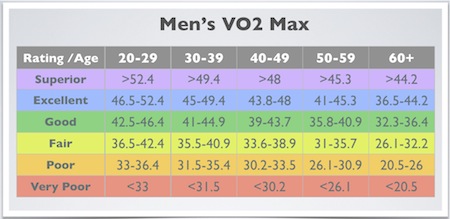
The truth is that I haven't trained for running in some time. And the 5k is a short enough pace that I can't really do well unless I significantly increase my overall speed at VO2 max. A longer distance race would allow me to compete at LT - something I am much better at doing naturally. For instance, I am fairly certain I could come close to a 7:39 pace for a 10k and I am sure I could do a half marathon at 8:00/mi or a touch faster. I've done it before (on accident, granted). But that pace for a 5k is not going to put me on any podiums.

I'm just not going to get faster in the 5k without doing the dreaded speedwork. One mile repeats at the top of LT range; quarter mile intervals at V02 max. Bleh. I have no desire or intention to do any of those.

Sorry running. I'm all out of love for you.

Saturday, June 4, 2011

A Little Training Ride

This morning I was pleased to be able to ride with a great group that included some folks from Team Racing Greyhounds out of metro-Detroit, quite a few of whom race on a company team for Nissan engineering center. The ride was a promotional event sponsored by Nissan and the American Diabetes Association for their annual Tour de Cure fundraiser. I was there representing a group of TdC folks who've raised money for the event. We also had a few folks from Novo-Nordisk, a diabetes medical device manufacturer. Oh, and Chris Horner & Levi Leipheimer from Team RadioShack were there too.

If you are not a cycling fan, it might help you to know that Chris & Levi just finished first and second in the Amgen Tour of California, probably the biggest international cycling event in North America (in terms of drawing a world-class field). When the ADA first announced this ride back in April, they weren't sure yet who would be representing the team. I was excited, and figured we would get to ride with some of the young neo-pros or others on the team who would not be on the Tour de France Squad for RadioShack. That race starts on my birthday, July 2 - not too long from now in training & preparation terms.

So you can imagine my surprise when it was announced a couple of weeks ago that we would be riding with the top two GC contenders for the Tour podium just a few days before they would both leave for Europe and their last bit of pre-Tour training. I was skeptical until right before they showed up this morning, actually. But show up they did. And we went for a ride.

Our VIP riders had time to do 40 miles with a brief rest stop to fill bottles and a quick bite for lunch before both had to catch a flight back to their respective homes for the last bit of vacation, rest, and packing prior to leaving for Europe. We rode a steady pace to begin, with the Nissan team members creating an early, non-violent selection to keep the ProTour guys in a group with folks experienced riding in a group. We followed your typical group ride protocol, in fact, chatting and gradually coming up to speed. We did a loop out of Chelsea, MI through Grass Lake and into the Waterloo recreation area, a large state preserve with some beautiful scenery ranging from wetlands to rolling hills.

AP Newsphoto published in Hazelton Times 
I had a chance to talk with Chris Horner on the first half of the ride. We talked about how much damn fun riding a bike is, especially after work when you've had a stressful day (he used to work at a bike shop in Bend, OR). We talked a bit about the Tour of California and the heroic effort put in by Matt Busche on the stage to Mt. Baldy. Horner remarked that he had been impressed by Busche's talent during his win at the Tour of the Basque Country when the kid had done great work for him and the team. I mentioned that I was happy to see Matthew get a win last week at the U.S. Pro Championships in North Carolina: "he pipped Big George in a sprint to the line!" Horner shared my enthusiasm and said "What a great picture! Not only winning, but edging out George!" Indeed. Here's the one he means (right). Well done.

Casey Gibson's shot of Horner & Leipheimer on Sierra Rd.
Horner also told me another story about stage 4 of the ATOC when he won and took the leader's jersey.

"I climbed Sierra Rd. in the big ring!"

"What?!" I asked? I've been up Sierra Road. When I was in San Jose. It is steep. And the steep part goes on for what I recall as a very long time. By ProTour standards, it's short, but it is intense.

"Not on purpose..," Horner continued. "I looked down when I was about 200 meters from the top, the part where it flattens out a little and saw I was in the big ring the whole time. At that point I just decided to go the rest of the way. I figured it would look good in the picture." Ah yes, the picture. Casey Gibson got it. So maybe it wasn't the *whole* time, CH. :)

Nice win just the same. And who am I to nitpick? I stayed in my big ring all day today though, I can confirm. We didn't do anything close to an epic climb like Sierra Road on today's 40 miler. But after our rest stop, we re-mounted for the second half of our ride and from the jump our pace was just a bit faster. At one point, I looked at the computer of the guy next to me and we were bombing down the road at 30+ mph (couldn't make out the exact speed). My own computer is b0rked, still need to get that fixed. I am very pleased to say that throughout the ride, I felt good and the pace felt more than manageable all day. At one point, some folks peeled off who were doing a different loop. The pack split and as some folks turned, Horner & I were left to catch up to the group that had kept pace going straight ahead. We caught the group pretty easily - and again, for these guys it was a recovery day all the way - but it sure felt nice to have pro-tour guys alongside in the pack, wizzing along like it was a typical Tuesday night.

Chris Horner & I, post ride
All in all, I am happy to report that Horner is as friendly, generous, and down-to-Earth as you'd hope he would be. Levi was more reserved. Where Chris was chatty - guys talking on a group ride kind of chatty - Levi was quiet. He would answer questions and acknowledge you with a smile, so it wasn't as if he was being dismissive. I just think the guy is a bit on the shy side is all. Horner was nice enough to offer another bit of advice to me about pro-level gear after we finished the ride. I asked if he'd pose for a quick phonecam shot. I fished my phone out of my jersey pocked and fiddled with the snack-size ziplock bag I keep it in as a moisture barrier. He laughed. "See...I upgraded. I go with this size," pulling a quart size slide-loc model from his own jersey, packed with his phone, wallet, and the requisite $10 bill. Now I know what the pros use.

One final thing: the Pro guys told me to tell you to donate to my Tour de Cure Campaign. You can do that - one week to go until that event - and win some cool prizes too. Thanks for reading!